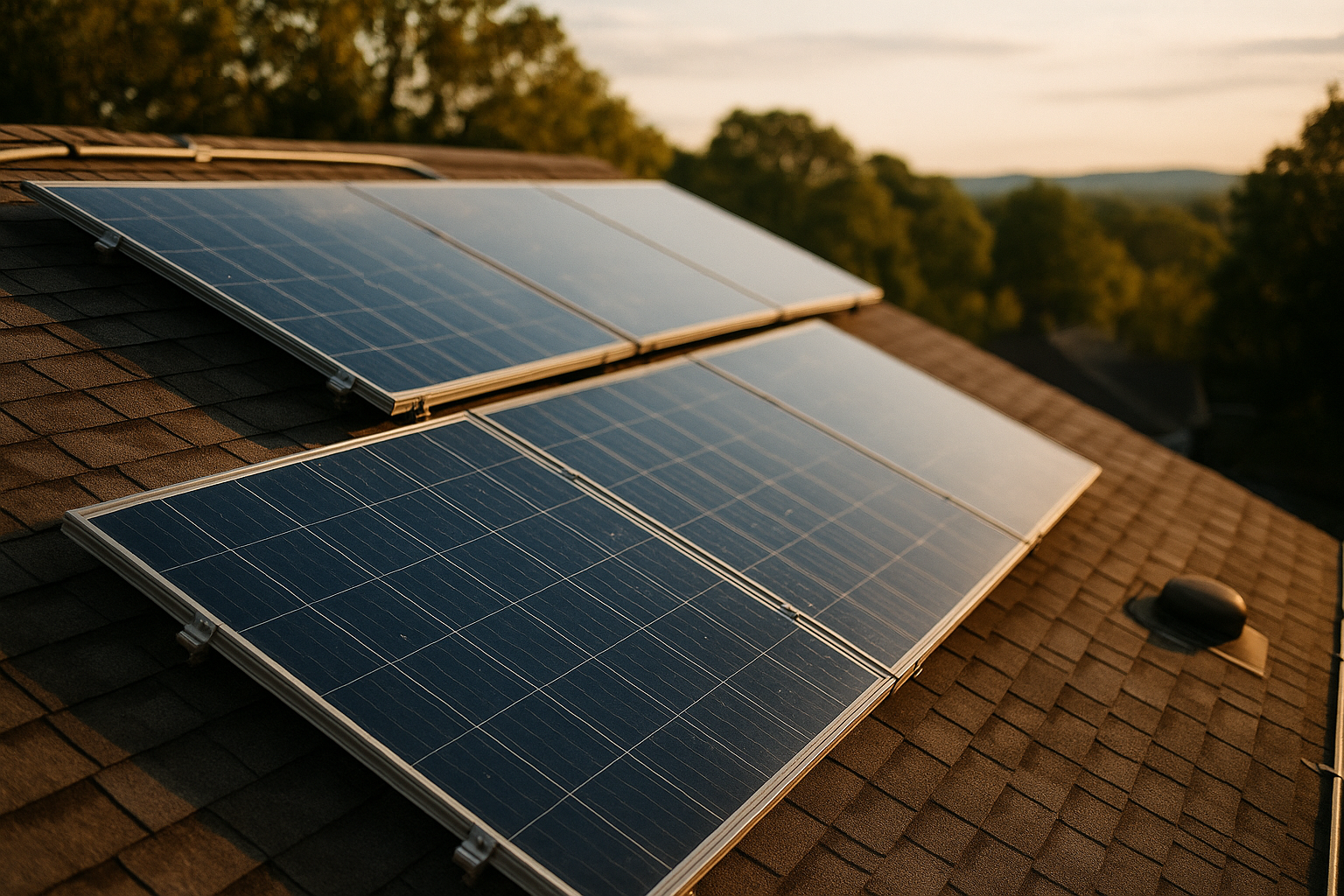
Learn about Solar Systems & Panels
Outline and Roadmap: Your Path to a Confident Home Solar Decision
Before diving into the circuitry and roof layouts, it helps to map the journey. Think of this as your flight plan from sunlight to savings. Below is the outline we will follow, and each part is expanded in the sections that follow.
– Section 1: Big-picture overview, market context, and what success looks like for a homeowner.
– Section 2: Solar panels explained—types, performance metrics, lifespans, and components that matter.
– Section 3: How to choose a solar panel installation company—credentials, proposals, warranties, and red flags.
– Section 4: Solar panels for home—site suitability, sizing, storage, and practical design choices.
– Section 5: Costs, incentives, financing, payback, and a grounded conclusion to help you act.
Solar has grown from a niche technology to a mainstream home upgrade because module prices have fallen markedly over the past decade while grid electricity costs have trended upward in many regions. For context, residential system sizes commonly range from 5 kW to 12 kW, and production varies widely by location: around 1,200–1,700 kWh per kW per year in much of the continental United States, with sunnier, higher-elevation locations toward the upper end and cloudier, northern sites toward the lower end. The practical takeaway is that design, placement, and shade matter as much as the panel model itself.
We will also separate marketing gloss from durable value. That means looking at temperature coefficients (how performance drops on hot days), degradation rates (how output declines each year), and warranties that protect both equipment and workmanship. Along the way, you’ll find checklists and simple rules of thumb—like sizing from annual kWh usage and checking your roof’s condition before permits—to keep you moving efficiently. By the end, you should have a clear framework to compare quotes apples-to-apples and select a reliable path to commissioning day.
Solar Panels Explained: Types, Ratings, and Real-World Performance
Not all solar panels are created alike, and the alphabet soup of datasheets can feel opaque. A panel is basically a set of photovoltaic cells wired together, laminated, framed, and backed for weather resistance. The primary cell types you will see are monocrystalline, polycrystalline, and thin-film. Monocrystalline modules are widely used for residential roofs because they deliver higher efficiencies—often around 19–23%—within a similar footprint. Polycrystalline panels tend to be in the 15–18% range and may cost a bit less per watt. Thin-film solutions can be lightweight and flexible but generally have lower efficiency, which means more area for similar output.
Beyond “percent efficiency,” two simple specs have outsized impact on day-to-day production. First is the temperature coefficient, typically around -0.26% to -0.45% per °C above 25°C. On a hot roof, a tighter (less negative) coefficient means the panel holds onto more of its rated power. Second is the degradation rate, commonly around 0.3–0.7% annually. Modern panels often retain roughly 80–88% of initial output after 25 years, depending on product class and environmental conditions. These numbers help you forecast long-term energy yield, which ultimately influences savings.
Other features can be worth the attention. Half-cut cells reduce resistive losses and can deliver better shade tolerance. Bifacial designs capture light reflected from bright surfaces such as light-colored roofs or ground coverings; the benefit varies by installation. You will also see ratings measured at STC (Standard Test Conditions) and NOCT (Nominal Operating Cell Temperature). Real roofs behave more like NOCT than STC, so use that line on the datasheet for realistic expectations. For a ballpark, 1 kW of panels might generate around 1,500 kWh per year in a moderately sunny climate, but tree shade, roof tilt, azimuth, and local weather can swing that number significantly.
Warranties round out the picture. Two are common: a product (or materials) warranty, often 10–25 years, and a performance warranty that guarantees a minimum output over time. You may also encounter frame load ratings (for wind and snow), fire classifications, and salt-mist or ammonia certifications for harsher environments. As you compare panels, focus on a combination of efficiency, temperature performance, long-term degradation, and reputable third-party testing rather than any single headline metric. When these elements line up well with your climate and roof, panel selection becomes a solid foundation rather than a gamble.
Choosing a Solar Panel Installation Company: Credentials, Proposals, and Protections
Selecting a solar panel installation company is as consequential as choosing the hardware. A capable provider acts as your project manager, engineer, and quality-control partner from the first site visit to utility interconnection. Start with basics: proper licensing in your state or province, proof of insurance, and verifiable experience with residential rooftops similar to yours (asphalt shingle, metal standing seam, tile, flat membrane). Ask about recognized installer certifications and ongoing safety training, which signal process maturity.
Next, evaluate the proposal itself. A thorough proposal typically includes a shade analysis, roof plan, electrical single-line diagram, production estimates under realistic conditions (NOCT or modeled), a component list (panels, inverters, racking), and assumptions about soiling, degradation, and system losses. Some installers provide a production guarantee stating they will remedy a shortfall within defined thresholds. Clarify what triggers a remedy, what counts as force majeure (unusual weather, customer-added shade), and how remedies are implemented. Also note the workmanship warranty; a common range is around 10 years, covering roof penetrations, wiring, and labor for fixes due to installation defects.
Communication and project flow are telling. Ask for an estimated timeline—design and permitting may take 2–6 weeks, utility interconnection another 1–4 weeks, with on-roof work often completed in 1–3 days for typical homes. Confirm who handles permits, structural review, and inspections, and whether the company coordinates any roof repairs needed before mounting. If you have time-of-use rates or export tariffs, verify that the system is designed with inverter settings and monitoring that align with your utility’s rules.
Watch for red flags that can cost you later. Overly optimistic production claims compared to local solar data, pressure to sign same-day, lack of clear warranty documents, or vague line items for “miscellaneous fees” deserve a pause. Solid companies welcome questions and can produce references, recent installation photos, and a sample contract with plain-language terms. For apples-to-apples comparisons, request itemized pricing per watt, the exact model numbers of major components, and a side-by-side of predicted annual kWh. You are not just buying equipment; you are hiring execution. A transparent, well-organized installer often signals a smoother path to a safe, code-compliant, and reliable system.
Solar Panels for Home: Site Suitability, System Sizing, and Storage Choices
Home solar works best when the roof and energy profile match the technology’s strengths. Start with the roof. South-facing planes (in the Northern Hemisphere) with 15–40 degrees of tilt are generally favorable, but east–west arrays can perform surprisingly well if shade is minimal. Conduct a shade assessment across seasons; a chimney or a deciduous tree can clip afternoon production in summer or winter differently. Check the roof’s age and condition. If replacement is due within the next 5–8 years, it is often more economical to reroof first to avoid remounting later.
Right-sizing begins with your annual consumption in kWh, visible on utility bills. A rule of thumb: in many midsun regions, each kilowatt of DC capacity may yield 1,200–1,700 kWh per year. If your home uses 10,000 kWh annually, a 6–9 kW system might target 60–90% of that load depending on goals, roof space, and incentives. For homes with time-of-use pricing, pushing more production into late afternoon can be valuable; panel orientation and inverter selection can help shape that generation curve. Consider future loads too—an induction range, heat pump, or electric vehicle can nudge you toward a slightly larger array or expandable design.
Inverter topology is part of the fit. String inverters are efficient and cost-effective, while microinverters or DC optimizers can mitigate partial shading and simplify module-level monitoring. Ask for a layout that keeps high-shade modules on separate strings or leverages module-level electronics where it makes economic sense. For wiring runs, neat conduit paths and proper rooftop junctions matter for maintenance and aesthetics.
Storage adds flexibility but should be purpose-driven. If your priority is backup for outages, size batteries around critical loads—refrigeration, lighting, internet, a few outlets—often 5–15 kWh for basic resilience, with larger capacities for extended coverage or whole-home backup. If the goal is rate arbitrage, smaller storage tuned to evening peaks can be effective. Thermal comfort appliances (HVAC) are energy-intensive; a targeted backup panel that isolates essential circuits can stretch stored energy further. Ground-mounts and carport arrays are alternatives when roof planes are suboptimal, offering better tilt and easier maintenance at the expense of yard space and trenching.
Helpful quick checks:
– Look for at least one roof plane with minimal shade from 9 a.m. to 3 p.m.
– Verify main service panel capacity and space for breakers or a subpanel if needed.
– Confirm clear attic access for wire drops and rafter inspections.
– Document future load changes so your design remains adaptable.
Costs, Incentives, Payback, and Long-Term Value
Budget is often the deciding factor, so let’s translate hardware into household economics. Installed residential prices in the United States commonly range around $2.20–$3.60 per watt before incentives, with variations by region, roof complexity, and equipment class. A 7 kW system at $3.00/W would be $21,000 before incentives. With a 30% federal tax credit, the net could drop to $14,700, assuming tax liability is sufficient to absorb the credit. Some states, municipalities, or utilities layer additional rebates, upfront payments, or performance-based credits that reduce the effective price further. Always confirm current policies, eligibility windows, and application steps because incentives evolve.
Payback depends on local electricity rates, solar resource, financing, and system design. In many areas, simple payback falls in a 6–12 year window, with internal rates of return influenced by escalation in utility prices and modest panel degradation. Levelized cost of energy for a well-sited home system can compare favorably with retail rates when incentives are included. Operations and maintenance costs are typically low—cleaning as needed, occasional monitoring checks, and an inverter replacement if warranted over decades. Budgeting a few hundred dollars per year for routine inspection and potential cleaning is a reasonable planning proxy, though many systems run for years with minimal intervention.
Financing shapes both cash flow and total cost. Cash purchases avoid interest and maximize lifetime savings. Secured or unsecured loans spread costs across 7–20 years; compare annual percentage rates, prepayment options, and whether dealer fees are embedded in the quoted price per watt. Leases and power purchase agreements can offer low upfront outlays, but read the fine print on escalators, buyout options, and what happens at term-end. Ownership usually yields the largest captured value over the long haul, while service agreements may prioritize simplicity.
Risk management turns on transparency and protections. Look for clear production modeling assumptions, written warranties for equipment and workmanship, and an operations handoff that includes monitoring access, component manuals, and a maintenance schedule. Weather is variable, but shade growth, debris, and roof wear are controllable with periodic attention. Insurance carriers typically cover rooftop solar as part of a dwelling policy; notify your insurer post-installation and confirm coverage limits.
Conclusion: A Practical Launchpad for Your Home Solar Project
For homeowners, the winning formula is straightforward: a trustworthy solar panel installation company, a design tailored to your roof and usage, and a financing path that fits your budget. Use production models rooted in realistic assumptions, weigh storage only if it serves a defined goal, and document warranties and responsibilities before signing. With those pieces in place, your roof can quietly turn sunlight into predictable value—day after day, season after season—while you focus on living comfortably under it.